
On March 5, 2026, Saxony’s Minister-President Michael Kretschmer opened a high-level evening event at the Representation of the Free State of Saxony to the Federal Government in Berlin — attended by Alessandra Todde and Italy’s Ambassador Fabrizio Bucci. The focus of the event was the scientifically grounded bid of Lusatia to become the site of the Einstein Telescope.
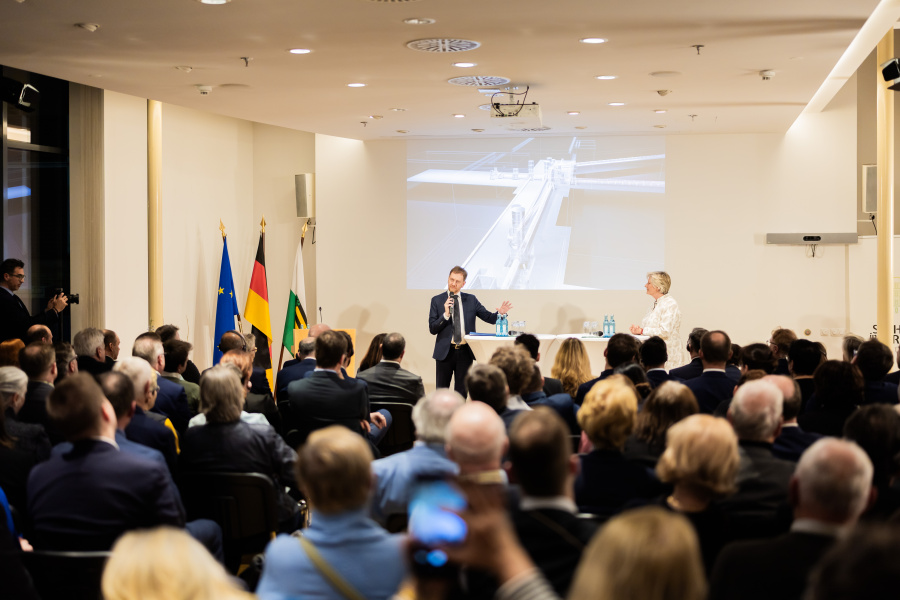
Saxony is reinforcing its plans to bring the Einstein Telescope — one of the most ambitious European research infrastructure projects of the coming decades — to the Free State. Around 200 guests from politics, science, and industry discussed the significance of the project for research, innovation, and international cooperation, as well as the opportunities it could create for eastern Germany.
“The entire world of physics has long dreamed of building an Einstein Telescope,” said Saxony’s Minister-President Michael Kretschmer at the opening of the event. “But until now, the necessary technology was missing. Now we are ready.”
He advocated for a science-driven selection process to determine the best location and the strongest overall concept. “This experiment will only be built once in the world because it is so expensive.”
“The Einstein Telescope will bring world-class international science to Lusatia and firmly establish the region on the European research map for the long term. Together with the local communities, we want to build the observatory over the coming years. In doing so, we will create new economic value, strengthen the region during its structural transformation, and open up new long-term opportunities, especially for young people,” emphasized astroparticle physicist Christian Stegmann.
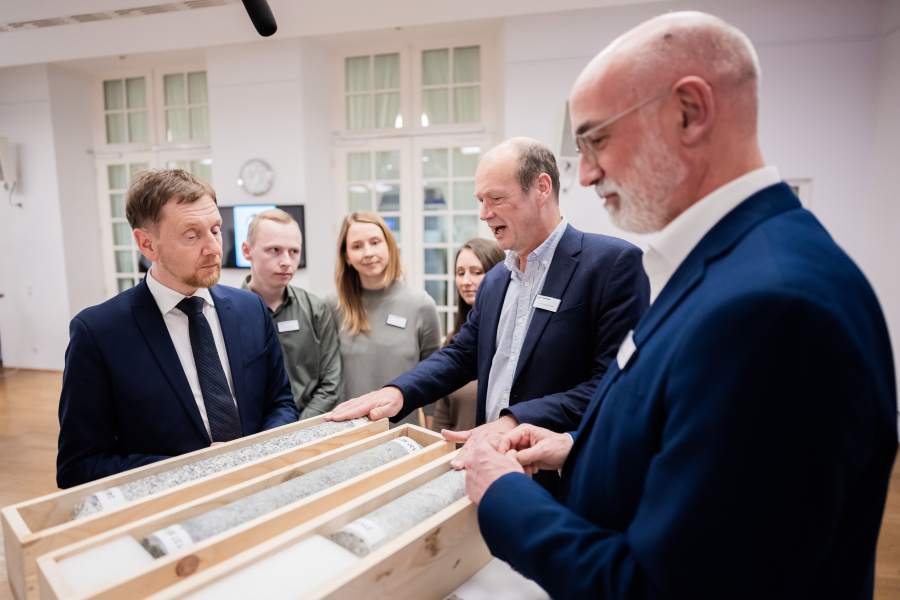
“The Lusatian granite offers exceptional stability and homogeneity. These are ideal conditions for an underground observatory — conditions that are rarely found anywhere in the world. Combined with the existing research infrastructure and the recognized expertise at the site, this creates a scientifically robust overall package. This qualifies Lusatia as a strong candidate in the European competition for the Einstein Telescope,” explained geophysicist Andreas Rietbrock, highlighting the region’s unique suitability.
Christian Stegmann and Andreas Rietbrock jointly lead the feasibility study for the future Einstein Telescope in the Lusatian granite formation.
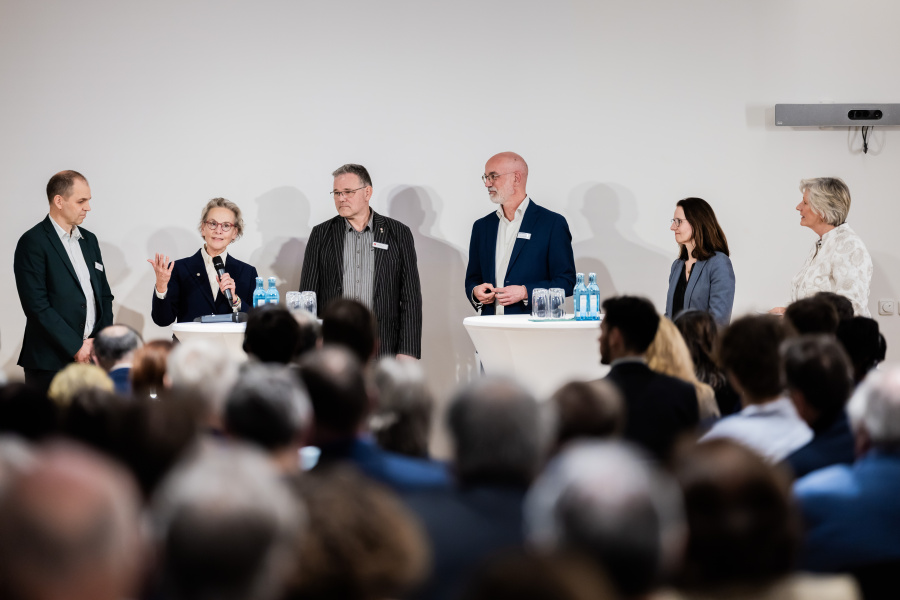
During the panel discussion, Heike Graßmann, Ursula Staudinger, and Frank Bösenberg highlighted the scientific potential and innovation opportunities the project could bring to the region. Harald Lück, a scientist at the Max Planck Institute for Gravitational Physics and at Leibniz University Hannover, emphasized the project’s wider significance for developments beyond the region. Lück is one of the initiators of the Einstein Telescope project and is actively involved internationally in advancing its realization.
Alessandra Todde highlighted the project’s European dimension. Like Saxony, Sardinia is also bidding to host the Einstein Telescope. On January 12, 2026, Todde and Saxony’s Minister-President Michael Kretschmer, in the presence of Science Minister Sebastian Gemkow, signed a cooperation agreement aimed at deepening the scientific collaboration between the two candidate regions.